Choosing a yoga teacher training is not always straightforward. If you’ve been researching options in Australia, you’ve likely come across a wide range of courses each offering something slightly different, yet often described in very similar ways.
It’s a meaningful investment, both financially and personally. So it’s completely natural to feel unsure about which direction to take, or to wonder whether a particular training is the right fit for you.
This guide is here to help you make a more informed and grounded decision one that aligns with what you’re actually looking for, whether that’s to teach, to deepen your practice, or simply to experience something new.
Not All Yoga Teacher Trainings Offer the Same Experience
A 200-hour yoga teacher training is widely recognised as the starting point for becoming a yoga teacher.
Organisations like Yoga Alliance provide general frameworks for these courses, but the reality is that each training is shaped by the people who teach it.
That means the experience can vary quite significantly from one program to another.
Some trainings are more structured and practical, focusing on how to guide a class and build confidence in teaching. Others may lean more into philosophy, personal reflection, or traditional practices. Neither approach is better than the other it simply depends on what you need at this stage.
Taking the time to understand how a course is delivered, not just what it promises, can make a noticeable difference in how supported you feel throughout the process.
What to Look for When Choosing a Training
There isn’t a single “perfect” training, but there are a few things worth paying attention to as you explore your options.
A clear and transparent course structure is a good place to start. Beyond the total number of hours, it helps to know how time is actually spent—whether there is a balance between theory, practice, and teaching experience.
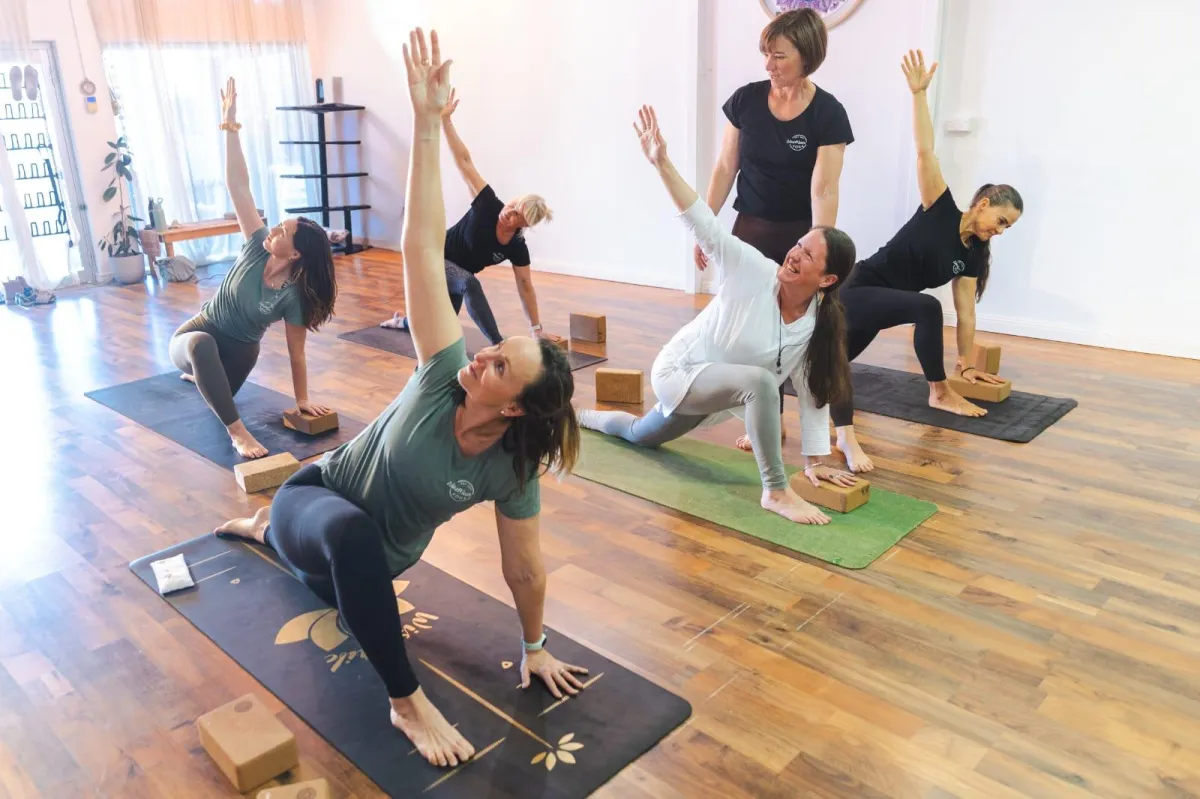
Teaching practice, in particular, is often where students begin to build real confidence. Having the opportunity to guide others in a supportive environment can make the transition into teaching feel more natural.
The size of the group can also shape your experience. Smaller groups tend to allow for more individual feedback and connection, while larger groups may feel less personal. Depending on how you learn best, this is something to consider.
It’s also worth taking time to understand the teaching style and approach of the trainers. Some people are drawn to a more traditional path, while others prefer something more grounded and practical. There’s no right or wrong here only what feels aligned for you.
Reading reviews can be helpful, especially when they speak to the actual experience rather than just the outcome. Honest reflections from past students often give a clearer picture of what the training is really like day to day.
The Role of Location in Your Experience
Location is sometimes treated as a secondary factor, but it can have a real impact on how you experience your training.
In larger cities, it’s often easier to find a wide range of options. At the same time, city-based trainings can come with more distractions and a faster pace, which may not suit everyone.
In contrast, smaller or coastal locations can offer a quieter and more focused environment. For some people, this makes it easier to stay present, absorb the material, and connect more deeply with the process.
Mandurah is one example of a place that is beginning to attract attention for this reason. With its natural surroundings and slower rhythm, it offers a different kind of learning space one that feels more removed from the usual pace of daily life.
A Growing Yoga Community in Mandurah
What’s also worth noting is that Mandurah is now home to its first yoga teacher training program. For a region that is steadily growing in its focus on health and wellbeing, this is a meaningful step.
Being part of a training in a developing community can feel different from joining one in a more established, and often saturated, environment. There’s a sense of contributing to something as it grows, rather than stepping into a space that is already crowded.
For some students, this creates a more open and supportive experience—not just during the training itself, but afterwards as well.
Opportunities After Your Training
It’s easy to focus on the training itself, but it can also be helpful to think about what comes next.
In larger cities, new teachers may find that there are many others entering the space at the same time. While opportunities are certainly there, it can take time to find your place.
In areas like Mandurah, where the wellness community is still expanding, there may be more room to explore teaching, connect with local studios, or even create something of your own.
Of course, everyone’s path will look different. Not everyone who completes a training goes on to teach—and that’s completely valid. For many, the experience is just as much about personal growth as it is about professional direction.
A Few Things to Be Mindful Of
As you continue your search, it can help to stay aware of a few common patterns.
If a course feels unclear about what it offers, or leans heavily on broad promises without much detail, it’s worth asking more questions. A well-structured training should be able to explain how it supports students, not just what outcomes it hopes to create.
It’s also helpful to check whether teaching practice is included, and how feedback is given. These are often the parts of the training that shape how prepared you feel afterwards.
Transparency, in general, tends to be a good indicator of a program’s approach.
Taking the Next Step
Choosing a yoga teacher training doesn’t need to feel rushed. It’s something you can take time with reading, asking questions, and noticing what feels right for you.
If you’re exploring options within Australia and are open to a more grounded and supportive environment, Mandurah offers a quieter alternative to more traditional locations.
As the first training of its kind in the area, it’s designed to provide a balanced experience one that supports both learning and personal development, without unnecessary pressure.
If you feel ready to explore further, the next step can be as simple as reaching out, asking questions, and seeing if the course aligns with what you’re looking for.